Blown-in insulation in Clarksville TN - an attic covered evenly, edge to edge
Upstairs too hot in summer and drafty in winter? We seal the gaps and blow in loose fill evenly to the edges of your attic.
Request an estimate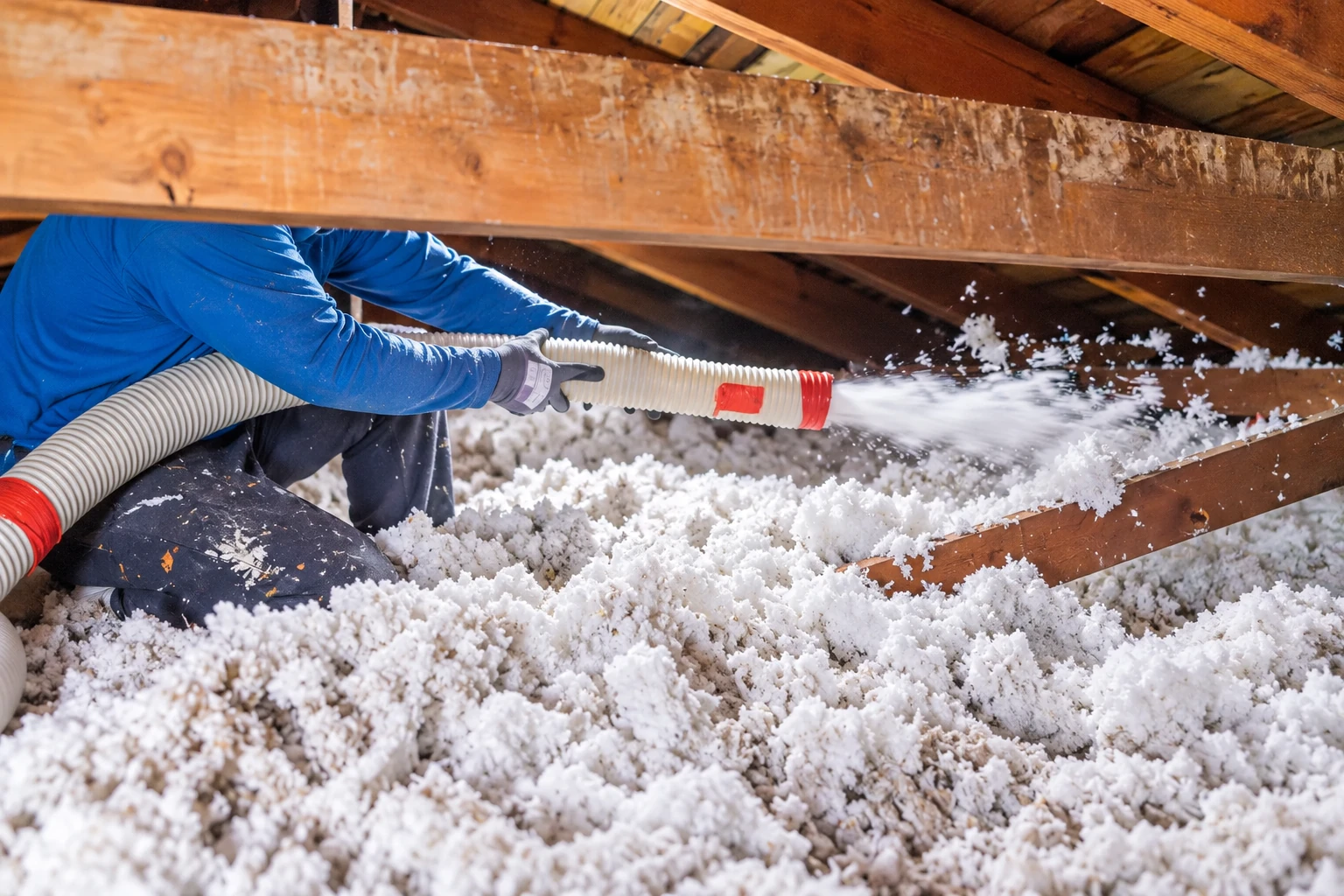
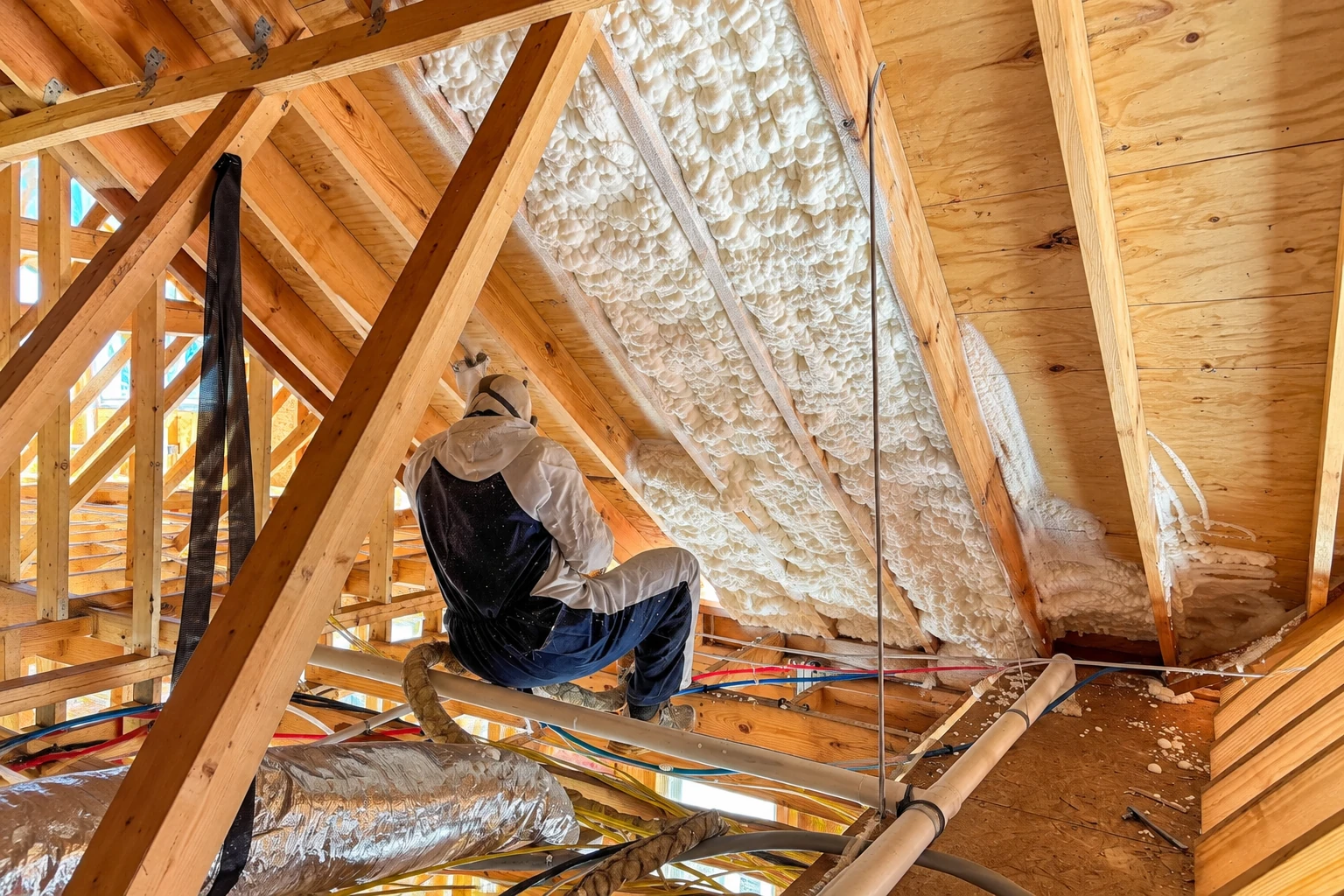
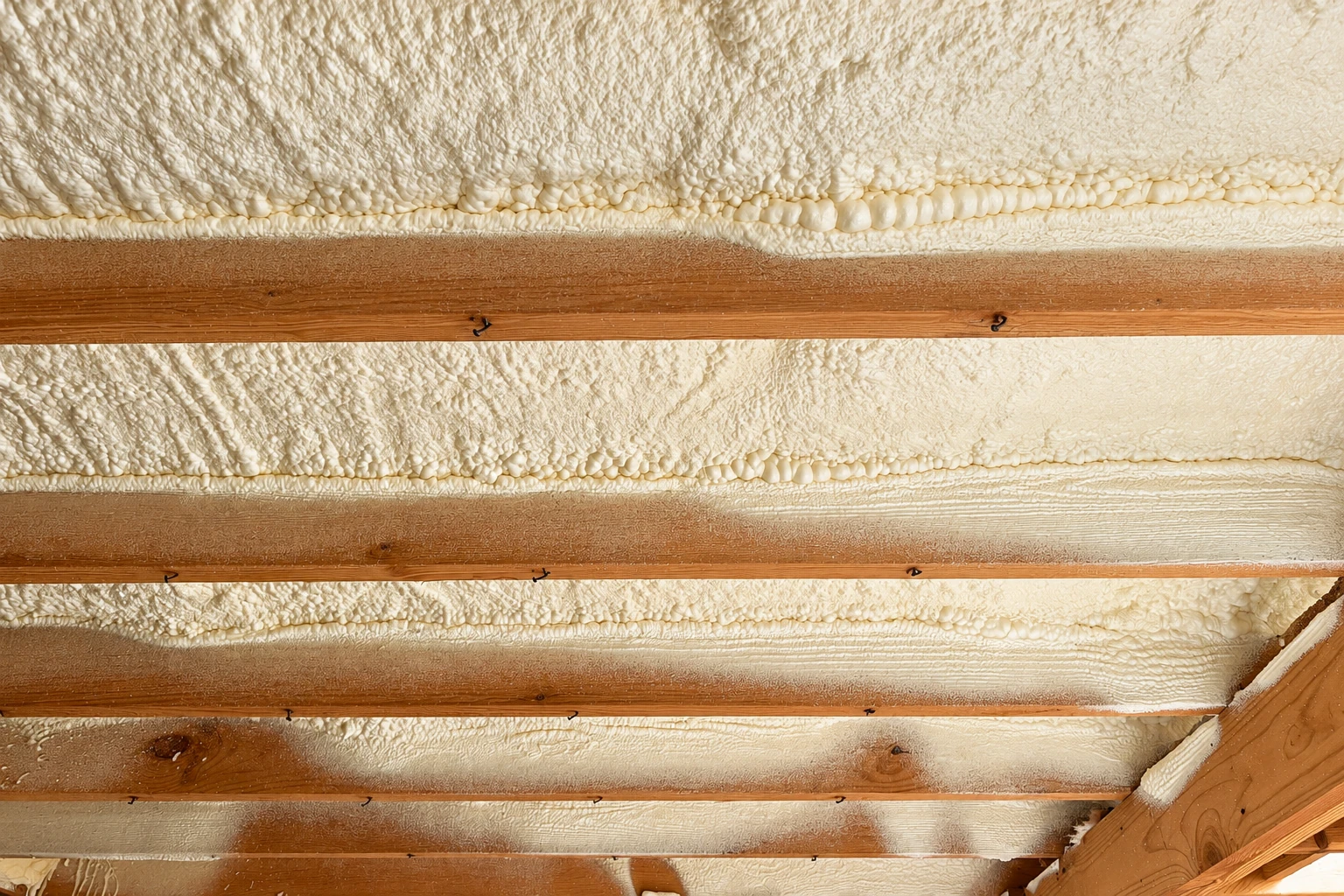
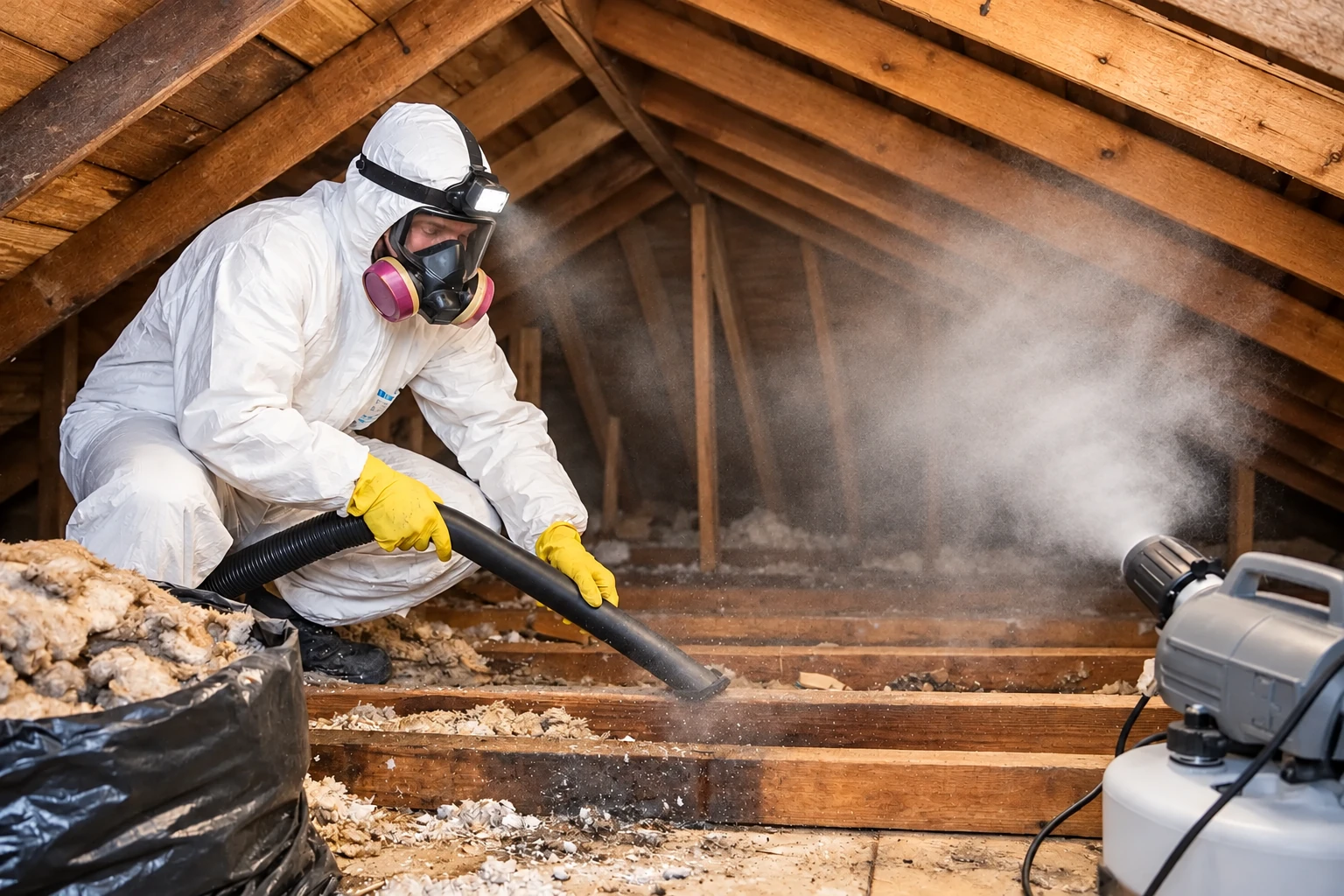
Is your attic ready for blown-in insulation?
Blown-in insulation is loose fill, usually cellulose or fiberglass, that we blow through a hose across the attic floor of your Clarksville home so the house holds its heat in winter and the upstairs stops baking in summer.
Most calls start with an upstairs that won't cool down, a drafty room over the garage or a power bill that keeps creeping up, and when I get into the attic there's usually a thin, patchy layer or not much at all. We're based in Clarksville and work across the cities around it, on both sides of the Tennessee and Kentucky line. The price moves with the size of your attic, how many inches are already up there and what has to be fixed before new fill goes in, and the schedule turns on those same repairs and on whether your address needs a permit. Your estimate gives you the figure for your attic.
How we put in blown-in insulation
First I go up and look at what's there, how deep it is, whether it's ever been wet, whether critters have moved in and whether the eave vents are open. Then we seal the gaps around the hatch, pipes, wires and can lights so the new insulation isn't sitting in a draft. Baffles, which are short chutes along the roofline, go in at the eaves so the vents keep breathing, and we keep fill back from older can lights that aren't made to be buried. Then we blow it in and keep the depth level clear out to the edges, because blown-in is only as good as its thinnest spot, and most attics I open up have it backward, deep in the middle and thin where the roof comes down.
If what's up there is soaked, moldy or full of droppings, we pull it out first with insulation removal, because new fill on top of a problem just keeps it company. When the drafts aren't only coming from the attic, our home insulation work looks at the walls, floors and crawl space too.
Blown-in insulation in Clarksville: permits and the houses we see
I won't tell you a blown-in job skips the permit until we've checked, because it comes down to where your house sits and what that office wants. Inside the city, Clarksville's Construction Division issues building permits and follows each project through to the end, and the city requires contractors working within its limits to register with it. Before we start, we find out whether your address falls under the city or the county and what that office asks for, and when a permit is needed for our part of the job, we take care of it.
A lot of the houses we're called to here are older ones with a thin layer up top, or a room over the garage that never got enough. We see the same attics on jobs in Oak Grove and Pleasant View, and we handle them the same way, looking first, sealing next and blowing last.
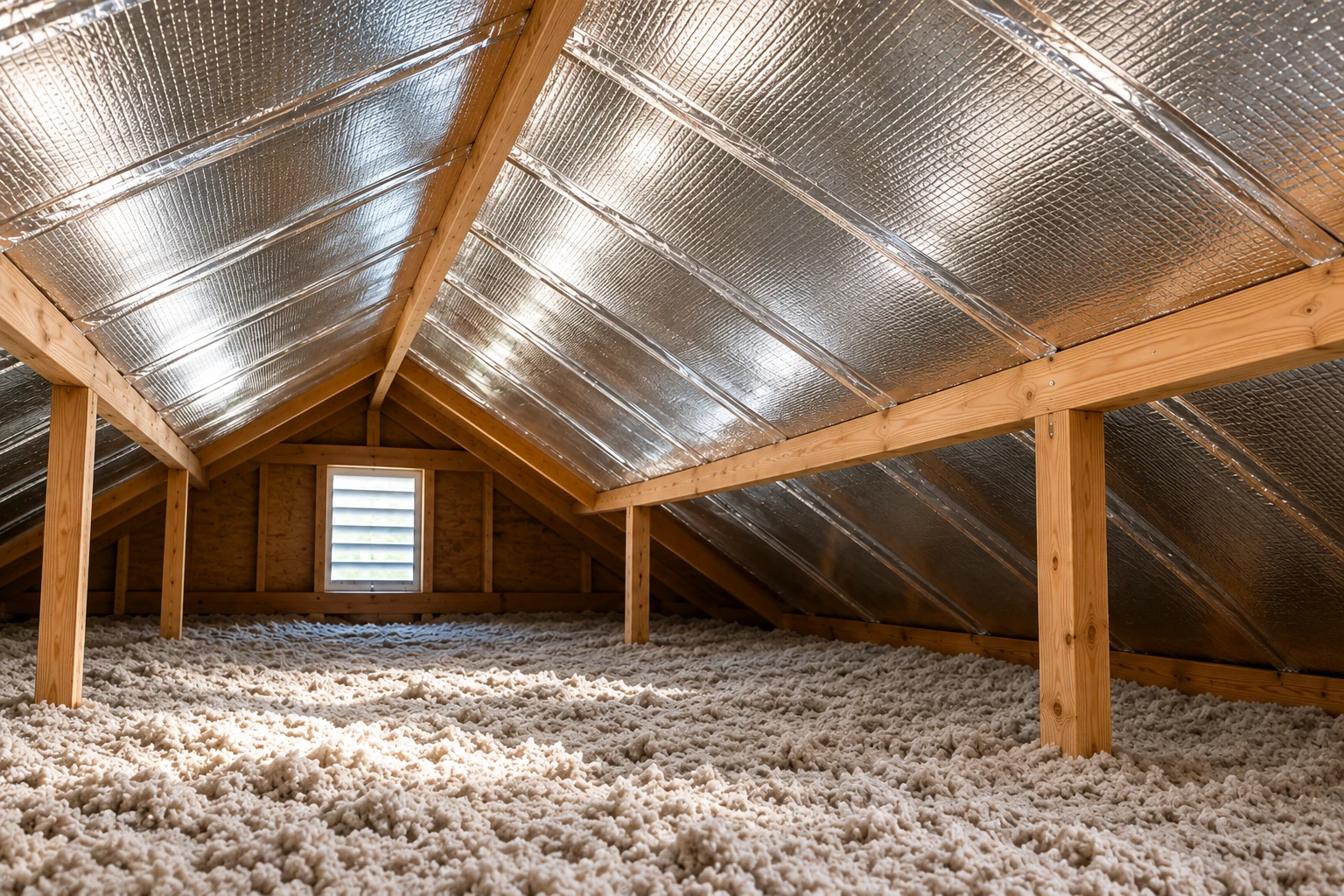
Loose fill, blown in evenly
Get a blown-in insulation estimate for your attic
Send the form and we'll get back to you within one business day to set a time to look at your attic. The estimate is free, done on site and comes with no obligation.
(931) 272-0044Blown-in insulation questions from Clarksville
How much does blown-in insulation cost in Clarksville?
The price comes down to your attic's size, how many inches are up there now and what has to happen before new fill goes in. Sealing a lot of gaps, adding baffles or pulling out wet old insulation all add to the job, while a dry attic that only needs topping up keeps it simpler. We measure and look before we price anything, so your estimate is the number for your house.
Why should air leaks be sealed before blowing in attic insulation?
Typical blown-in insulation leaves air leaks open, so the gaps have to be sealed with caulk or foam before the fill goes down. Otherwise air keeps slipping through the ceiling however deep the layer is. When you compare quotes, ask whether sealing is in there as the first step.
How do I tell how much insulation my attic needs?
Measure what's up there now and compare it with ENERGY STAR's recommended level for most attics, which is about 14 to 20 inches depending on the type of insulation. The difference is roughly what a job should add. I'll measure it with you at the estimate so we're looking at the same number.
Can new blown-in insulation go over my old insulation?
Yes, new insulation can be a different type from the old, so loose fill can go right on top of existing fiberglass batts or blankets. That only holds if the old layer is dry and clean. If it's damp, moldy or full of droppings, it comes out first.
What needs to be fixed in the attic before blowing in insulation?
Damp insulation from a roof leak, moldy or rotted rafters or joists, little or no ventilation, vents that dump moist air into the attic and old knob and tube wiring, the oldest kind of house wiring, should all be corrected first, according to the same guide. We settle those before anything new goes in, because a tighter attic doesn't help if the wood stays wet or the furnace can't vent right. If part of the fix belongs to a roofer or an electrician, we'll tell you so.
How do I know if my attic has vermiculite insulation?
Vermiculite is a lightweight, flaky gray mineral about the size of a pea, and it may contain asbestos. If you see it, leave it alone until an approved lab has tested it, and your local health department can name an approved lab. We don't disturb it or blow anything over it until that's settled.
Get your Clarksville attic ready for winter
Before we start, ask your power company about the rebate of up to $300 on insulation and air sealing that TVA EnergyRight and local power companies offer, then call (931) 272-0044 to set up your estimate.